Showing posts with label Tanzania. Show all posts

Wednesday, March 18, 2015

The upcoming Guest House in Umalila/Italazia village Mbeya Tanzania

The remote village of Italazia in Mbeya Tanzania is characterized by good weather with plenty of rainfall and fertile soils. Rains normally start in October and end in May followed by the dry and cold season between June and September.

The above picture was taken on route from Mbeya to Umalila showing the cultivated land. 

The people in this village live in extreme poverty, experiencing high infant mortality, maternal death and unsupported treatable diseases. Despite the extreme poverty, the villagers are very energetic and determined. Their main source of income is sustenance farming. 

Houses are mostly constructed from mud and baked bricks, with roofs of either corrugated metal or grass with ventilated pit latrines. The main source of energy for lighting is a wick or hurricane lamp, while the main source of energy for cooking is firewood.  Umalila can be accessed by bus, though the road is dusty, bumpy, and usually full to capacity.

Despite the poverty, Umalia also has a growing economy which has now provided a base for those wishing to start businesses or to help stimulate small entrepreneurs in the area to grow.  Alfred Rogers, one of the Community Builders partners, has worked hard and is still working to help eradicate extreme poverty in Umalila. He partnered with Community Builders to buy a grinding for the village, as villagers had been forced to travel great distances to grind the grains they use for daily food preparation. This grinding mill has been of great help to the community. The picture to the left shows the grinding mill.


Now, with the growing economy, guests visit Umalila without a proper place to stay. The necessity of a guest house was realized as a long time project, which will generate income and pay forward the profits to the individuals living in poverty to start up small projects for sustainability. 

The picture below show the villagers digging the trench for the foundation of the guest house. 


Currently, the guest house is still at the foundation stage as seen in the above picture.  I will be sending more updates on this project as it progresses.

Tuesday, September 23, 2014

Kipwa Sumbawanga TANZANIA

Sumbawanga is a city located in western Tanzania. It is the capital of the Rukwa Region. The regional population is approximately 150,000 based on a 2002 census. The name of the town translates as "throw away your witchcraft", thought to be a warning from local spiritual "healers" to any bringing in superstitions and practices relating to spiritual healers from other areas; there are still some healers who practice both in town and in the surrounding smaller villages.
Kipwa village is one of the villages in our Kasanga target area. It has a total population of over 2500 people. Its benchmark rating is 2.8 out of 5, and with this rating, the village has neither private nor government dispensary. The only medical service in the village is the CNI supported kiosk pharmacy.
This village is at the Tanzania-Zambia boarder, and there is no road to the village. Communication with the outside world is almost dead. The only means of transport to and from the village is by water. Kipwa village can receive medical services in two ways: by visiting the nearby Kapele dispensary (ill equipped with medicines and personnel) which is over 8 kilometers away or by going to the neighboring country of Zambia at Mpulungu town, a distance of 20 kilometers away.
The lives of these people are put at great risk, especially during the rainy seasons when there are great out-breaks of malaria and diarrhoea. The only available marine transport is not reliable as the boat owners routine is not consistent, otherwise for a quick transport one has to hire the boat which is too costly for the poor to afford.
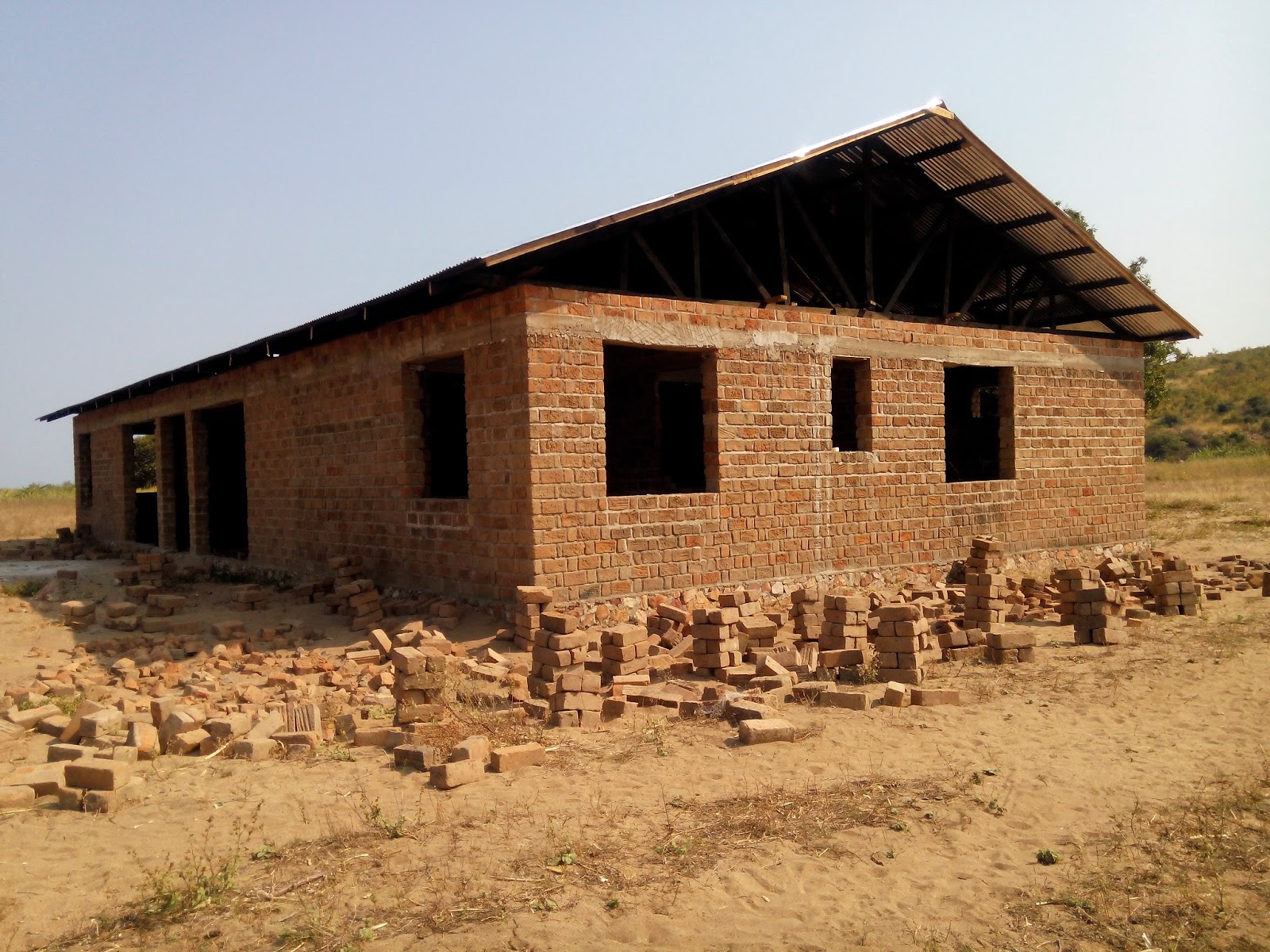
Compelled by those circumstances, the Kipwa villagers decided to mobilize themselves using their hard-served resources to build the dispensary. They managed to construct a 14-room building, which is now 3 years old waiting to be finished, as their strength to carry on came to a stand still. So the villagers started seeking support from some donors and other people to finish the dispensary building.
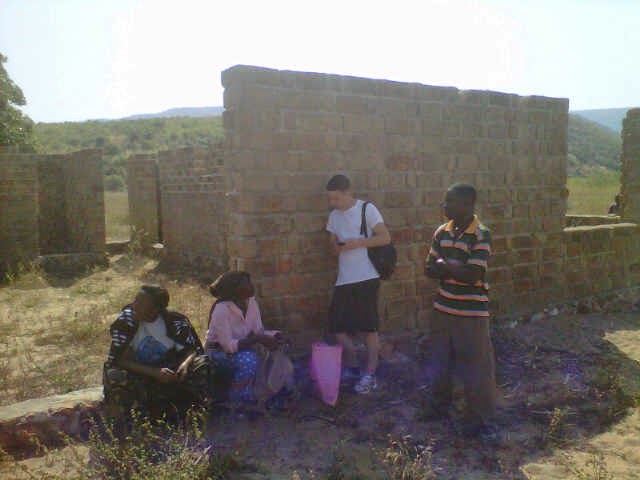
This is a picture of the construction that the villagers had just started .  Cantwell (Community Builders PiF Coordinator), David (Community Builders intern) and  CNI staff had gone to pay a visit to the villagers.
After a tragic deaths event in September last year, which claimed the lives of the lives of 2 pregnant women and 13 children en route to Kapele dispensary, CNI immediately passed on this information to Community Builders. With utmost concern and importance, Community Builders responded by providing the financial support with the roofing of the building. CNI received $2500 from Community Builders which was  used to purchase the roofing.
The construction is still on underway as seen in the above picture.
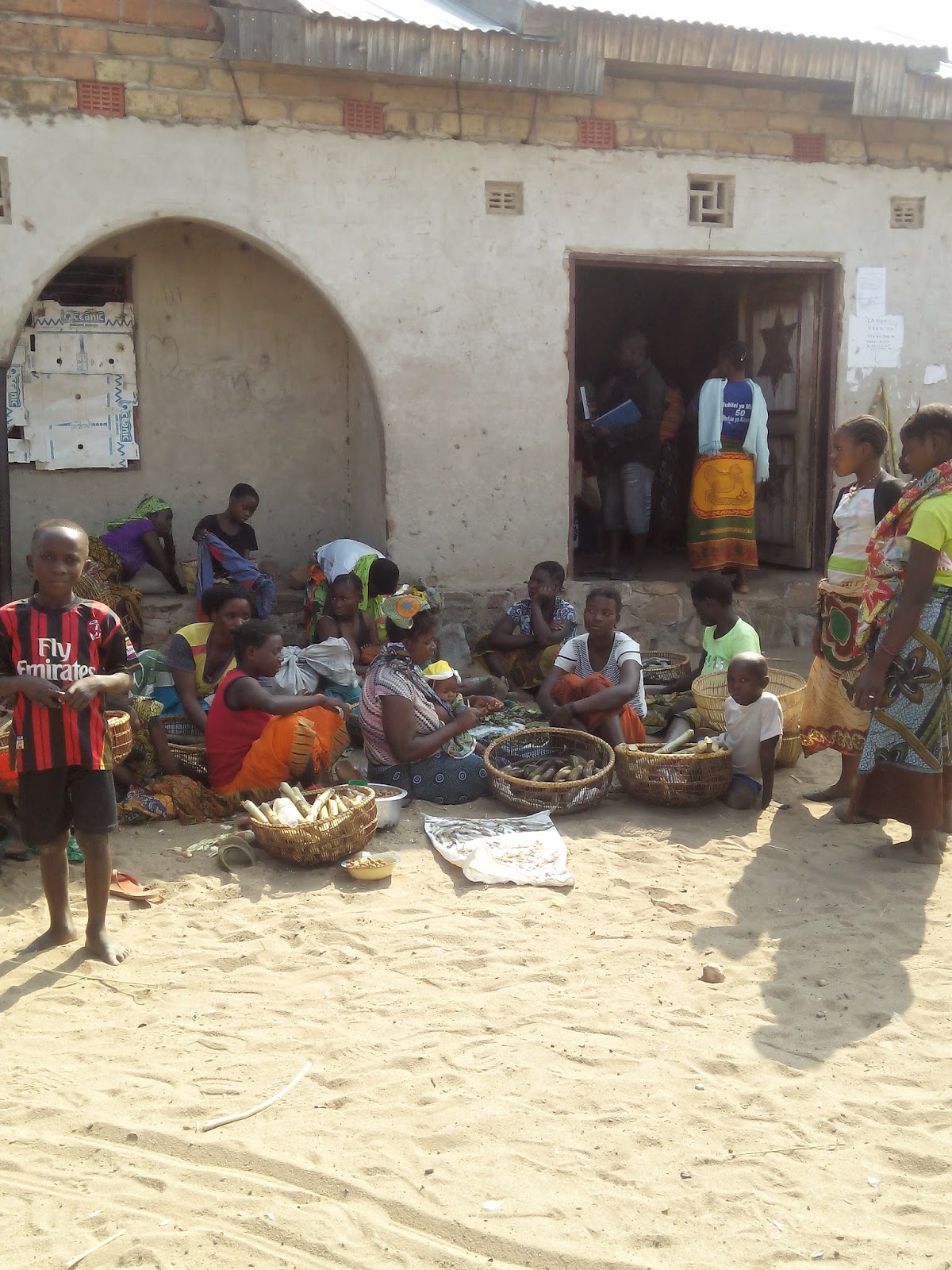
The is still a lot of work in order to complete this dispensary,  the below picture show some of the mothers of Kipwa vilalge at the local Authority offices in Kipwa receiving medical treatment for their children.  The office rooms are being used temporarily as the dispensing rooms as seen in the picture below.

Friday, September 12, 2014

Bukoba Kagera Tanzania

Bukoba Kagera region is situated on the shore of Lake Victoria in the northwestern corner of Tanzania.  The main economic activities in Kagera are agriculture (coffee is the main cash crop and banana plants are the main food product),  fishery and trading, especially in urban centers.

In the past, Kagera has been affected immensely with HIV/AID since the first case that was reported in Tanzania in 1983.   Kagera was badly affected; most of the emerging generation of the middle age died.  

Willson is one of the PiF leaders who lives in Bukoba Kagera. He is working on helping start self sustainable projects for the people of Kagera.  Community Builders and Anhart foundation are looking for ways to help him reach this goal. In addition to a small PiF grant sent to him by Community Builders, Jackson Naiman, another PiF recipient, has also been paying forward to Willson. As a result, Willson has started a small poultry project. Willson is an entrepreneur, he operates a bodaboda (motorcycle as a taxi). He also plants pine trees that will be ready in 15 years.  He is also a coffee farmer.

The pictures show Willson's poultry project and his boda boda taxi.

Very soon Willson will start the process of having a CBO registered in Kagera.  With the CBO, he will be able to help eradicated extreme poverty in the area.

Below are pictures showing one of the person Willson has given forward to by the names of Fradnus Myasha who has started a small eatery.


Thursday, August 21, 2014

Mbeya, Italalazia, TANZANIA

Mbeya is located in southwest Tanzania. Mbeya has weather with enough rainfall and fertile soil to enable it to be the largest producer of maize, rice, bananas, beans, potatoes, soya nuts and wheat in relation to other areas of Tanzania. There is also extensive animal husbandry.  Mbeya is also surrounded by a number of villages, Ilembo, Pashungu, Italazia, Masoko, Shola, Izuo and Igale. These villages are characterized by extreme poverty conditions.

Alfred Rogers, one of our PiF leaders in Tanzania, is based in Italazia village. This is a very remote village and the poverty conditions are extreme.  However, over the years, Community Builders Network has helped Alfred start various PiF projects that are helping eradicate extreme poverty within Italazia village .

Among these projects are piggery, dairy farming, fishery, pharmacy kiosk, small scale businesses such as selling of vegetables, and animal feeds. Recently, the women of the village have started small scale businesses by using the Pay It Forward model that Alfred Rogers introduced in Italazia. Here are some pictures showing the progress in Italazia.

Women selling vegetables at the market place.

Zero grazing by Alfred Rogers.


This is the manual way of preparing land in Italazia. No use of oxen or tractors due to the poverty situation.

Wednesday, July 2, 2014

CNI Maize Farm

CNI has just finished harvesting their maize. Early January this year, Bertha traveled to the CNI land in Rukwa district to prepare the land for planting. Bertha has done a phenomenal job. The pictures below shows the stages of the maize up until harvesting and storage.
 
The use of oxen in preparing of the CNI land.
 

Bertha overseeing the planting of the maize seedlings.

The maize growing just after weeding.
 
At this stage the maize is ready enough to be boiled and roasted as food.
 
This is the stage at which the maize is now dry enough to be cut down.
 
Maize ready to be grinned.
 
Transportation of the maize to a place where the grinding will be done.
 
Grinding of maize underway.
 
Parking of the maize into bags.
 
Bertha now overseeing the transportation of the sacks of maize to the stores.
 

Wednesday, June 11, 2014

Moshi, Tanzania


Cantwell Lihanda traveled to Moshi last year in August and met 3 ladies and one gentleman who are working hard to make ends meet even though they live in conditions of extreme poverty.

Cantwell met with Mama Amani, a widow who struggles to feed her entire family. Among the family members is her sister, who is mentally challenged and who has two daughters under her care. Mama Amani received a grant of $500 to help boost her business of buying cloth material from Dar es Salaam, sewing clothes and selling them in a local market in Moshi town.

Janet Bosco currently is their leader who also received $500 to boost her business of selling ready made clothes. She is a single mother of two. She says she is doing very well, her business has grown and she has been able to pay forward to one person already.

Mary Mogela is a lady who ails from a strange disease. Her stomach has been swollen for more than ten years. She cannot move or work. She depends on people for food and upkeep. She received a grant of $500 and her sister-in-law started a grocery business which is doing very well now. She is able to continue to feed Mary and has paid forward as a group with the rest of the participants to ten poor people.


Ashrifu Rajabu is a widower with two children. He was selling groundnuts from door to door. With a grant of $500, he started selling shoes from door to door. He currently still sells both ground nuts as well as the shoes.

Together they have paid forward to 10 poor people who have also started small business to sustain themselves.