Showing posts with label Medical. Show all posts

Thursday, July 2, 2015

How Community Builders, Anhart Foundation and CoBI are Improving Maternal and Newborn Health Care in DRC

In 2013, I came face to face with the reality of how women in rural areas die from pregnancy and childbirth related complications. I had a chance to visit dilapidated maternity wards in the Uvira villages of DR Congo and the remote Kasanga villages of Tanzania. A Community Builders intern from Canada, David, narrated to me how he witnessed a good number of deaths of babies in just one night as he and Bertha Kisuda of CNI were on a night shift in the hospitals in Sumbawanga, Tanzania. It was heart breaking.
 
Women are the most vulnerable at childbirth and children are vulnerable in DR Congo, especially up to five years of age. Global measurements of maternal death and child mortality are among the highest in DR Congo. The Save the Child Society rates DR Congo as the most dangerous place o


n earth to be a woman, even though a small number of the other nations such as Chad and Central Africa Republic have slightly higher rates of maternal death.

Most maternal deaths are preventable, as the health-care solutions to prevent or manage complications are well known. All women need access to antenatal care in pregnancy, skilled care during childbirth and support in the weeks after childbirth. CoBI has constructed three maternity clinics, in Bukavu, Uvira and Mumosho. On average, one baby is born every day in the clinics (approximately 350 births per year). This local statistics fits with birth rates in DR Congo (34 births, per year, per 1,000 population).  Thus, in a DR Congo community such as Kahungu which has 12,000 persons, approximately 400 births would be expected annually.  The statistics indicates that almost all the births are occurring at the maternity clinics.

The clinics have a small reception room, a delivery room and room with four beds for after care. The maternity clinics are reducing maternal death and child mortality. CoBI nurses state that in conditions of extreme poverty in DR Congo, 4 out of 10 women will die in child birth in their lifetime without adequate maternity health supports.  Published statistics for all of DR Congo place the risk at 1 in 10, however, in villages of extreme poverty the higher death rates are plausible, especially if a village reaches a 10% or greater risk of death for each birth and if total number of pregnancies reach a total of 10 or more.


The clinics also promote child health and reduce the overuse of local dispensaries which dedicated most of their resources and space to maternity issues before the construction of the maternity centers.  I have compiled some picture of the newly built maternity clinics.


Below are some of the pictures of the new maternity wards in DRC. 

This is a picture of 'Helga Schmidtke maternity ward', constructed in Kabanda village of Mumosho.


This is a picture of a maternity ward constructed in Uvira.
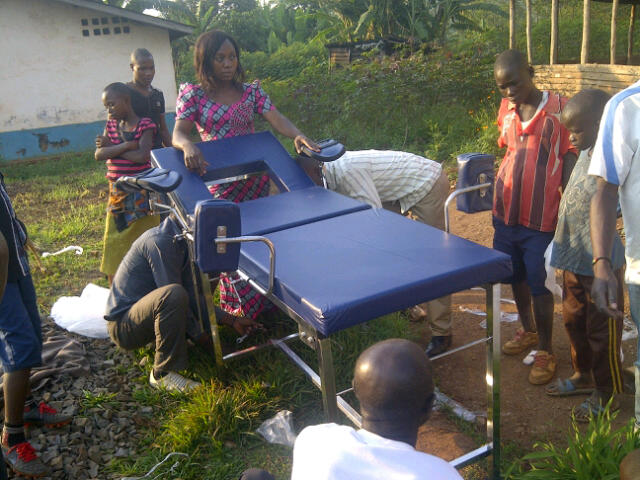


​This is a picture of delivery and ordinary beds donated to 'Helga Schmidtke maternity ward', constructed in Kabanda village of Mumosho.

Tuesday, September 23, 2014

Kipwa Sumbawanga TANZANIA

Sumbawanga is a city located in western Tanzania. It is the capital of the Rukwa Region. The regional population is approximately 150,000 based on a 2002 census. The name of the town translates as "throw away your witchcraft", thought to be a warning from local spiritual "healers" to any bringing in superstitions and practices relating to spiritual healers from other areas; there are still some healers who practice both in town and in the surrounding smaller villages.
Kipwa village is one of the villages in our Kasanga target area. It has a total population of over 2500 people. Its benchmark rating is 2.8 out of 5, and with this rating, the village has neither private nor government dispensary. The only medical service in the village is the CNI supported kiosk pharmacy.
This village is at the Tanzania-Zambia boarder, and there is no road to the village. Communication with the outside world is almost dead. The only means of transport to and from the village is by water. Kipwa village can receive medical services in two ways: by visiting the nearby Kapele dispensary (ill equipped with medicines and personnel) which is over 8 kilometers away or by going to the neighboring country of Zambia at Mpulungu town, a distance of 20 kilometers away.
The lives of these people are put at great risk, especially during the rainy seasons when there are great out-breaks of malaria and diarrhoea. The only available marine transport is not reliable as the boat owners routine is not consistent, otherwise for a quick transport one has to hire the boat which is too costly for the poor to afford.
Compelled by those circumstances, the Kipwa villagers decided to mobilize themselves using their hard-served resources to build the dispensary. They managed to construct a 14-room building, which is now 3 years old waiting to be finished, as their strength to carry on came to a stand still. So the villagers started seeking support from some donors and other people to finish the dispensary building.
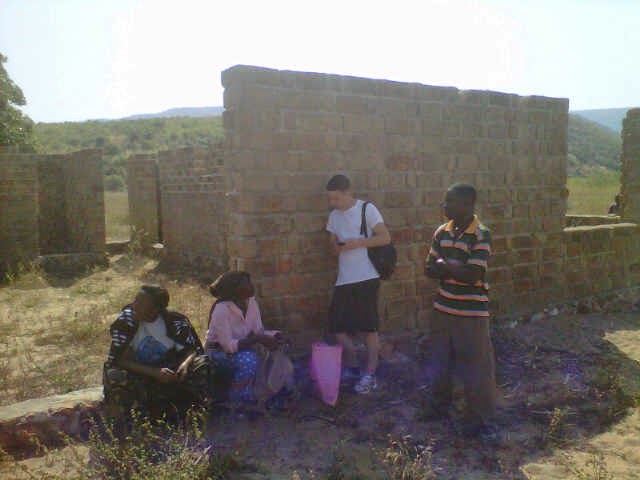
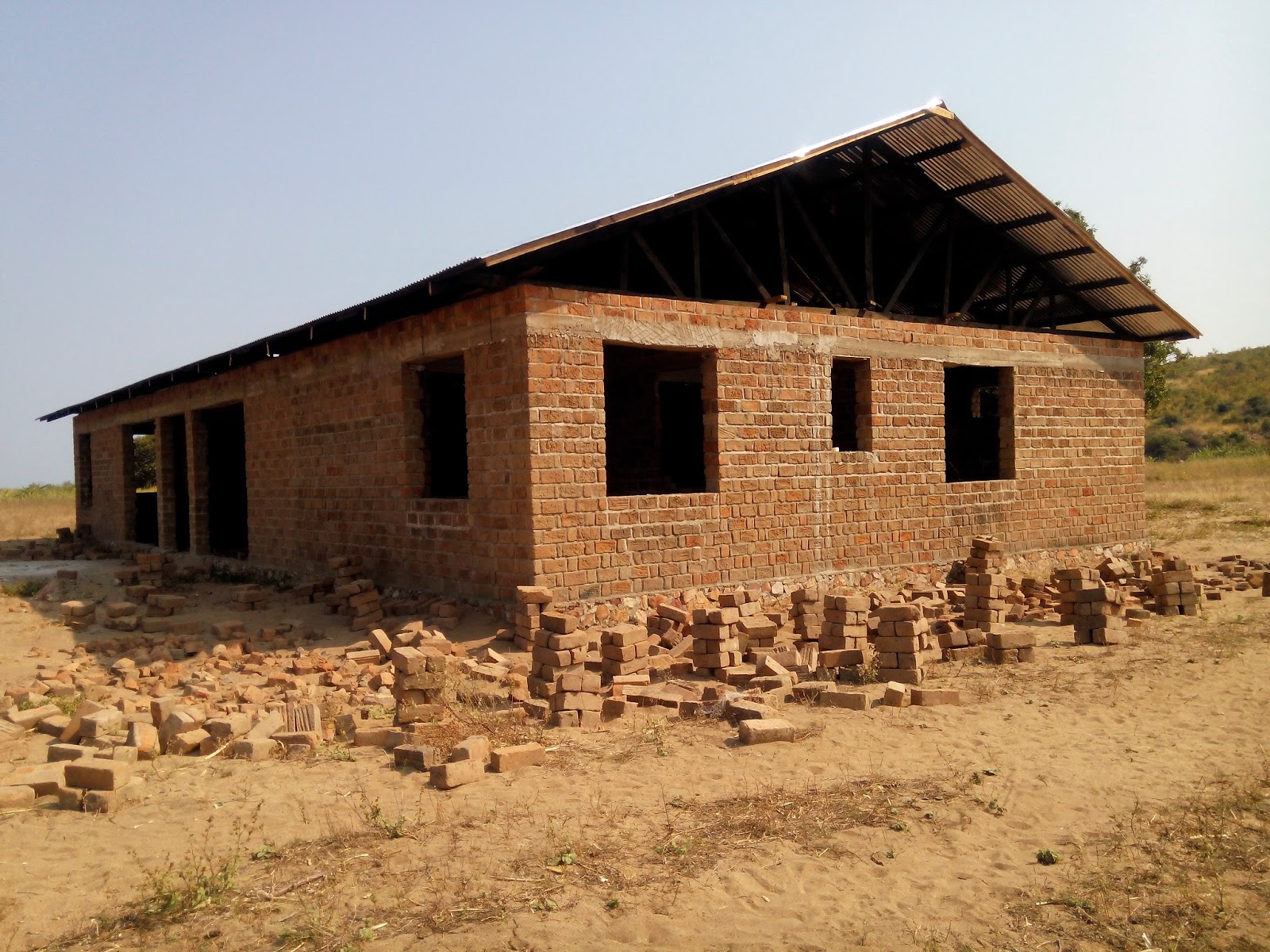
This is a picture of the construction that the villagers had just started .  Cantwell (Community Builders PiF Coordinator), David (Community Builders intern) and  CNI staff had gone to pay a visit to the villagers.
After a tragic deaths event in September last year, which claimed the lives of the lives of 2 pregnant women and 13 children en route to Kapele dispensary, CNI immediately passed on this information to Community Builders. With utmost concern and importance, Community Builders responded by providing the financial support with the roofing of the building. CNI received $2500 from Community Builders which was  used to purchase the roofing.
The construction is still on underway as seen in the above picture.
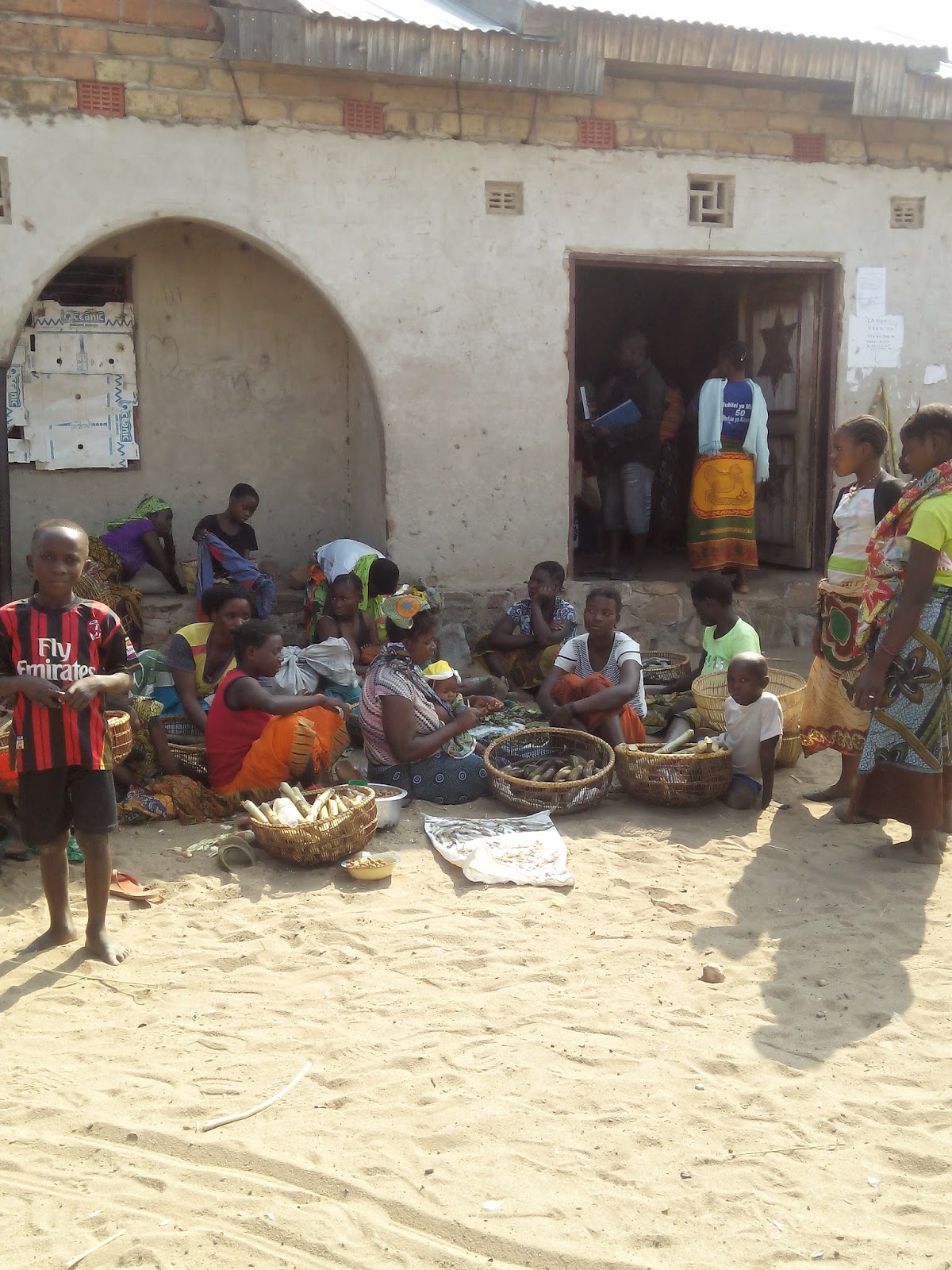
The is still a lot of work in order to complete this dispensary,  the below picture show some of the mothers of Kipwa vilalge at the local Authority offices in Kipwa receiving medical treatment for their children.  The office rooms are being used temporarily as the dispensing rooms as seen in the picture below.

Wednesday, July 16, 2014

Harvesting

It is harvesting time. 
 
The first week of July, CNI harvested their corn. 
This week, Morogoro PAG Community Development, which is a  registered CBO, harvested rice.
Now, CoBI is in the process of harvesting their corn.  CoBI has already constructed the pig enclosure and housing structures and is now looking for pigs and feeds.
 
This  picture shows  the maternity ward that CoBi is constructing at Kikongo village nearby Uvira.
They had to also rehabilitate a small bridge found half way to the construction site. 
 
This maternity ward will help improve maternal and newborn health care services in the villages of extreme poverty.

Friday, June 27, 2014

Morogoro Pharmacy

Massanja Simon lives in the village of Mvuha, located in the district of Morogoro. He has  been operating a pharmacy kiosk in this village for 8 years.  Community Builders, having seen how he was able to get medical services close to the local villagers, gave him a grant of $700 to boost his pharmacy and later payback the profits to the people living in extreme poverty conditions in his network.

This picture shows Massanja in the middle. Cantwell and David paid him a visit last year.

So far Massanja has paid forward to two participants in his community who are living in extreme poverty to start up small businesses for self sustenance.

With his pharmacy kiosk he is operating, he has succeeded to reach a number of people who were sometimes helpless. For instance:
(i) Simple treatment their minor through 'spot diagnosis'
(ii) Referral of complicated detected patients.
(iii) Early detection of diseases which would result into complications.
(iv) To some extent, availability of drugs especially antibiotics and anti malarial as bacterial and malaria infections are the leading diseases
(v) Giving health education to patients living in poor areas.


However he has been facing a number of challenges in his services as follows:
(i) Most of people living in extreme poor condition do believe in witchcraft.

A child who is traditionally prevented from convulsive febrile illnesses. Black ropes/rings round the neck and hand can be seen. This is associated with witchcraft beliefs.
(ii) Lack of a laboratory to support my diagnoses.
An old weighing scale he is using which needs to be exchanged for a digital one.
(iii) Lack of transport to easily reach other areas.
(iv) Opening of a laboratory belonging to Roman Catholic church almost one kilometer from his pharmacy kiosk
has led to more patients going to the clinic resulting in reduced sales. 
 
The establishment of simple check-ups will help Simon Massanja restore the patients going to the Roman Catholic dispensary. With the availability of antenatal clinic, and the Road to Health center, patients will visit the kiosk more often. This will in turn lead to  Massanja offering health education to the residents on various diseases. By so doing many will stop believing in witchcraft associated traditions and seek for medical attention.
 
Massanja further reports that, good flow of patients will increase the income in his pharmacy kiosk , this will enable him to pay forward accordingly.

Thursday, May 22, 2014

Chikungunya/Dengue Fever in Haiti and Tanzania.

MacDonald, Haiti

Chinkungunya fever is spreading in Haiti, as reported by Nixon Gabriel. Gabriel is starting an impromptu clinic in the community that is funded by the people in MacDonald. Julie, a CBG director, has sent CBG funds to purchase more medicine.

This picture to the left shows a nurse administering treatment to a patient in Haiti.

The picture to the right is of the outside of the clinic in Haiti.

Dar-er Saalam TANZANIA

According to the Tanzanian government, priority now is to provide appropriate care for the people who have contracted the virus. While there is no specific antiviral treatment for the disease, infected persons can receive free medical care at public hospitals. The latest figure shows there we are 31 patients admitted in various hospitals though the figure could have gone higher.

It is dangerous for anyone feeling malaria signs to take malaria tabs without testing. Patients are advised to go to the hospital for testing to establish what exactly they are suffering from.

About 90% of patients have been found with [milder] dengue fever. In severe cases, the disease progresses to dengue haemorrhagic fever, where patients experience gum and nose bleeding, or dengue shock syndrome, where patients suffer from extremely low blood pressure.

Most people who contract dengue fever recover without complications.  In addition, death occurs in less than 1% of treated cases of the regular disease and between 1-5% of untreated ones.